BOCA
CANGREJO
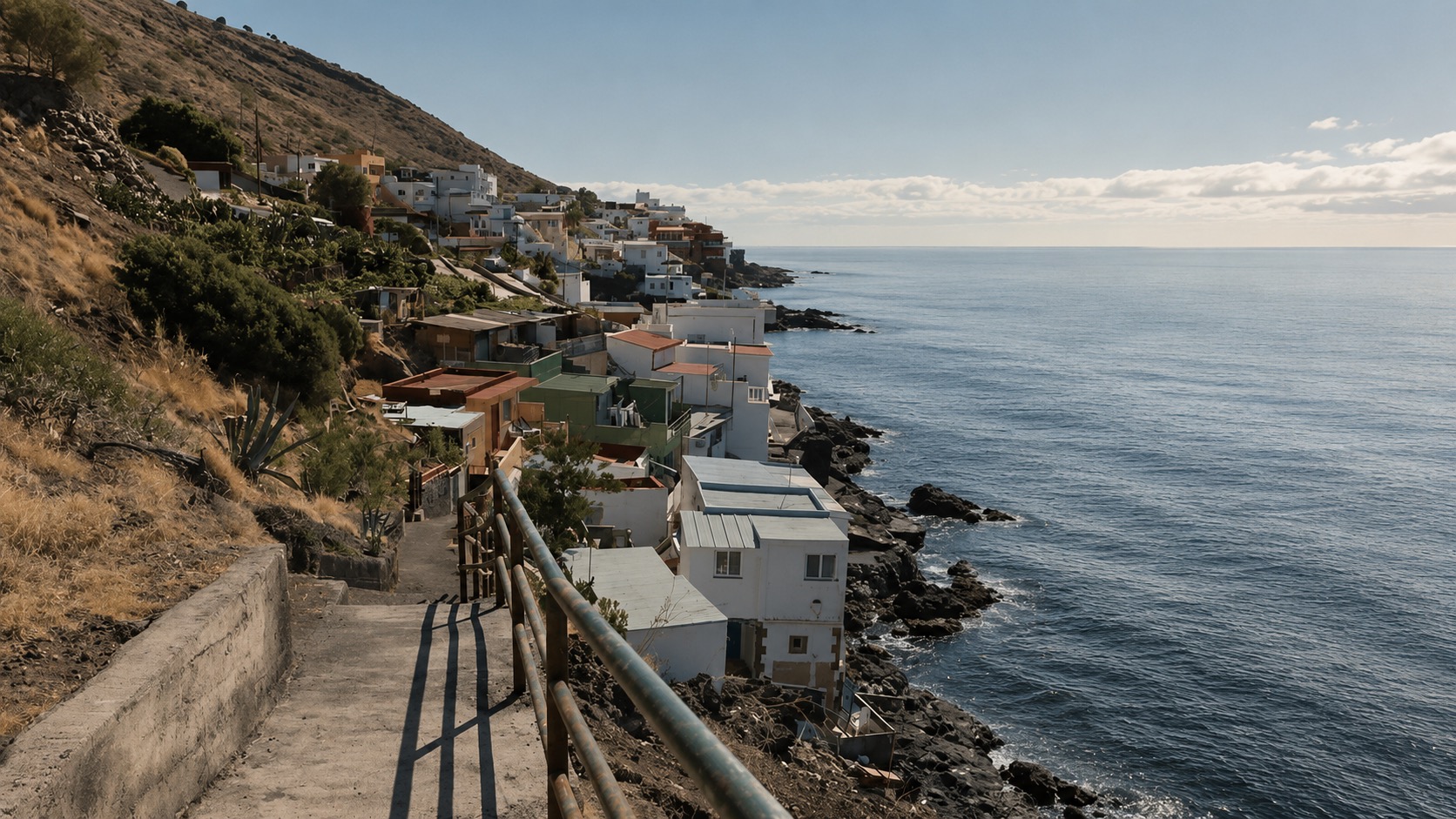
Scarcity, constraint and value on Tenerife's metropolitan coast
Research status: 09 August 2026
Category: PLACE
Geography: Boca Cangrejo / El Rosario / Tenerife
Research type: Independent spatial and development assessment
Boca Cangrejo occupies an unusual position within Tenerife's metropolitan coastal belt.
It combines direct exposure to the Atlantic, a small-scale traditional settlement structure and immediate proximity to the Santa Cruz metropolitan area with a planning framework, coastal-law context and infrastructure condition that make conventional development difficult.
The investment value of Boca Cangrejo may derive less from its capacity for further development than from the scarcity created by the conditions that constrain development.
This distinction is fundamental.
Boca Cangrejo should therefore not initially be understood as a conventional development location. It is better understood as a scarcity market for existing, legally robust coastal assets.
The principal opportunity may lie in identifying individual properties whose legal status, building substance and relationship to the coastline have already resolved conditions that would be difficult or impossible to reproduce today.
At the same time, those constraints create substantial due-diligence requirements. Coastal-law status, planning conformity, building legality, access, infrastructure resilience and permissible tourism use should be treated as asset-specific conditions rather than assumptions derived from the neighbourhood as a whole.
Interesting for existing assets with unusually strong legal and physical positions. Unsuitable for speculative acquisition based primarily on future development potential.
A coastal settlement that resists replication
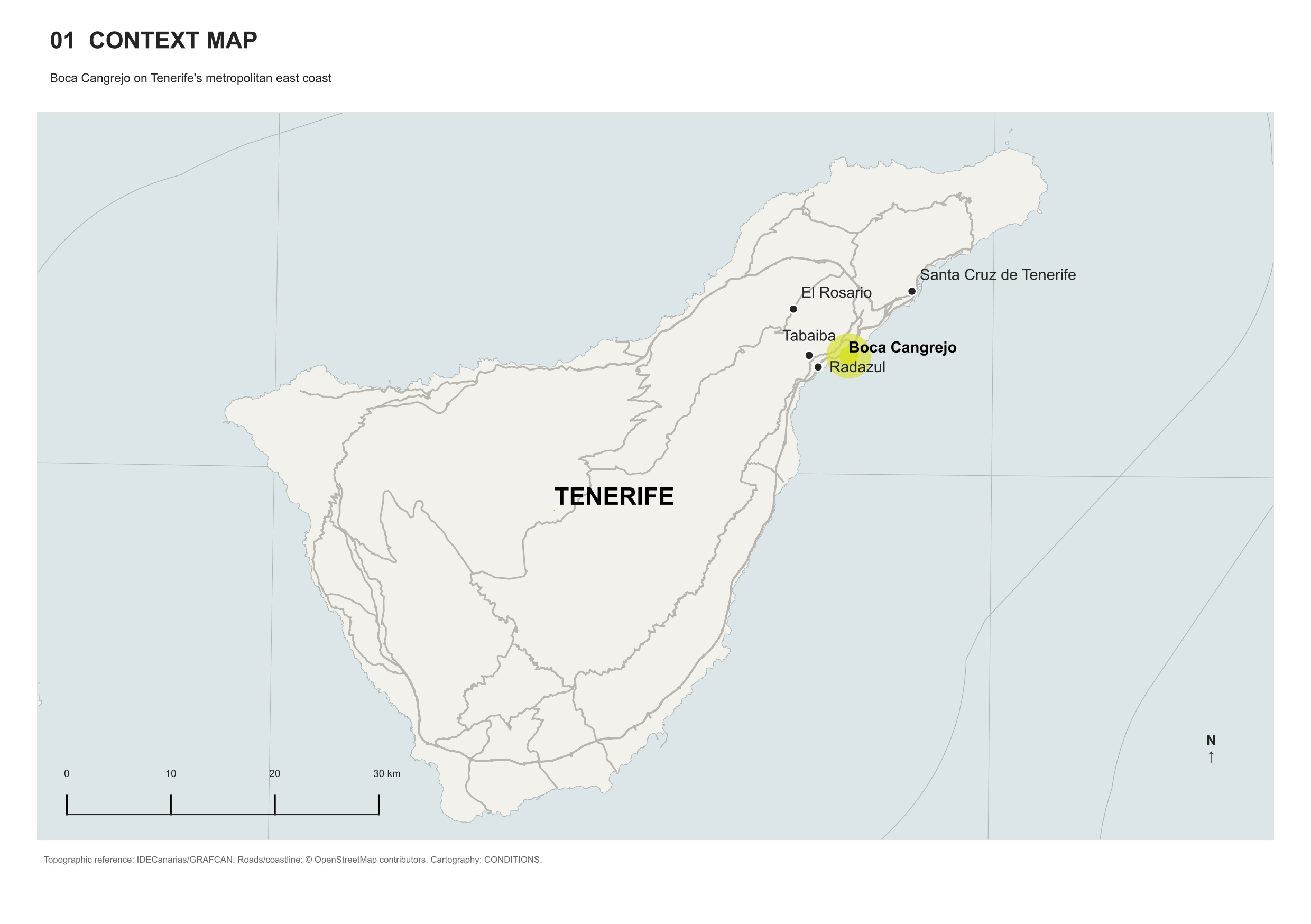
Boca Cangrejo belongs to the municipality of El Rosario on Tenerife's east coast. The municipality itself identifies Boca Cangrejo as one of its established population centres.
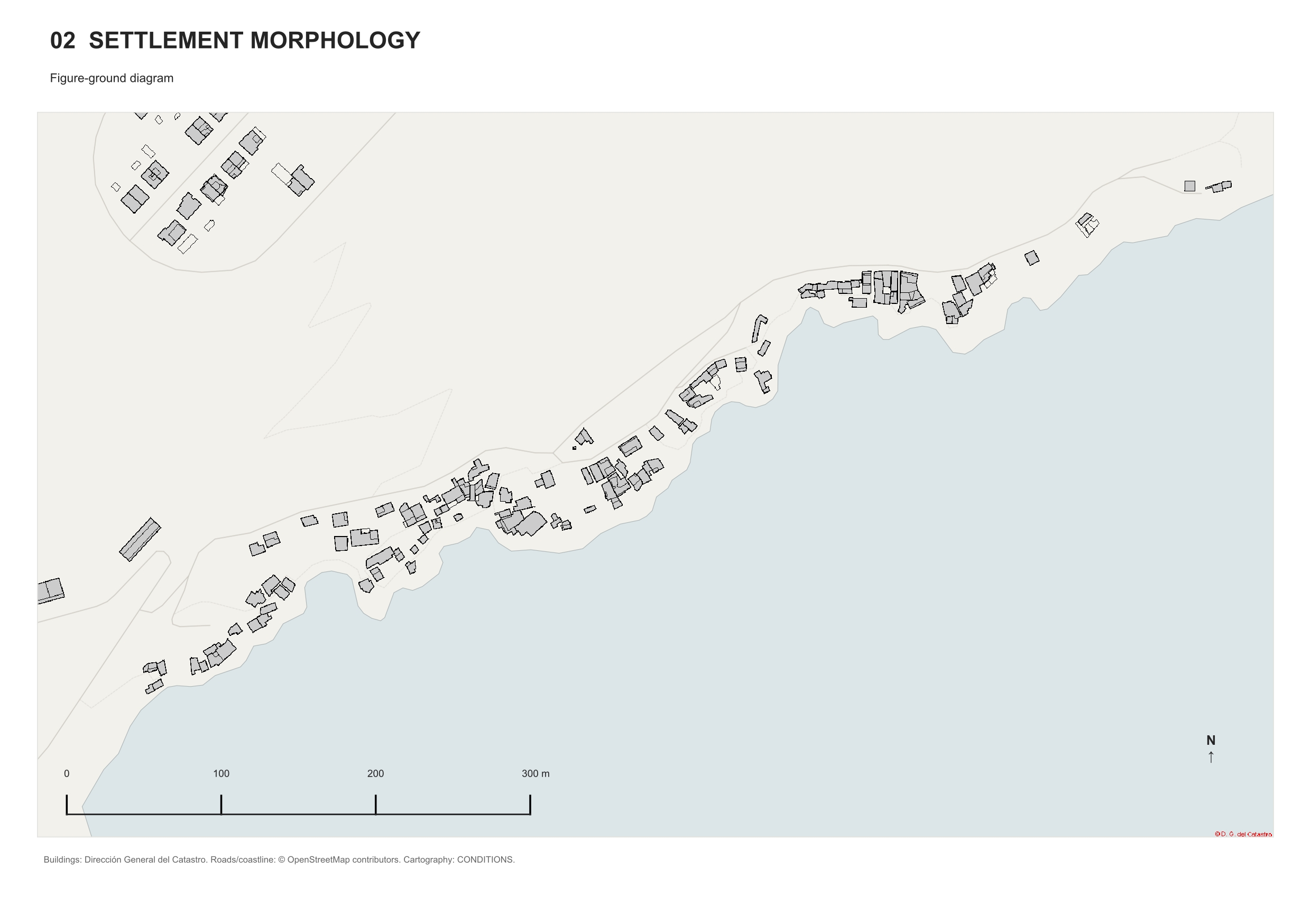
The settlement differs morphologically from the neighbouring planned residential developments of Costanera, Radazul and Tabaiba.
The municipality's emergency planning documentation explicitly distinguishes Boca Cangrejo and Varadero as traditional coastal neighbourhoods, characterised by small urban structures close to the sea. It also describes Boca Cangrejo as an area in which self-built or individually promoted buildings predominate, in contrast to the planned development of nearby Costanera.
This distinction is important.
Boca Cangrejo is not simply another coastal residential development.
Its value proposition begins with its urban morphology.
Metropolitan proximity without metropolitan character
Boca Cangrejo sits within the wider Santa Cruz metropolitan corridor and is connected to Tenerife's public transport network. Tenerife's official transport data includes the 141 Santa Cruz – Añaza – Acorán – Boca Cangrejo connection and identifies a Boca Cangrejo public-transport stop.
This produces an unusual spatial condition:
physically close to metropolitan infrastructure,
perceptually separated from metropolitan
urbanity.
The neighbouring coast has undergone considerably more conventional development. The municipal emergency plan describes Tabaiba and Radazul as areas containing substantial concentrations of buildings, including high-rise structures along the coast, whereas Boca Cangrejo retains a much smaller-scale fabric.
This contrast is potentially economically significant.
The value of Boca Cangrejo is therefore not merely:
sea view + Tenerife.
It is:
sea + metropolitan accessibility + spatial difference.
Informality as spatial capital — and legal risk
The morphology of Boca Cangrejo is one of its strongest differentiators.
Municipal documentation describes traditional coastal neighbourhoods such as Boca Cangrejo as small aggregations of homes near the sea, sometimes organised along narrow streets or linear structures.
This creates qualities increasingly difficult to produce through conventional real-estate development:
- direct relationship between dwelling and ocean,
- irregular building relationships,
- pedestrian-scale spaces,
- heterogeneous architecture,
- minimal separation between settlement and coastline,
- absence of a standardised resort environment.
These characteristics create place identity.
But precisely the same characteristics can also generate:
- difficult emergency access,
- uncertain building histories,
- complex coastal-law positions,
- irregular property boundaries,
- limited parking,
- limited expansion possibilities.
The qualities that make Boca Cangrejo desirable are partly the same qualities that make it difficult to invest in safely.
This is not a contradiction. It is the central condition of the place.
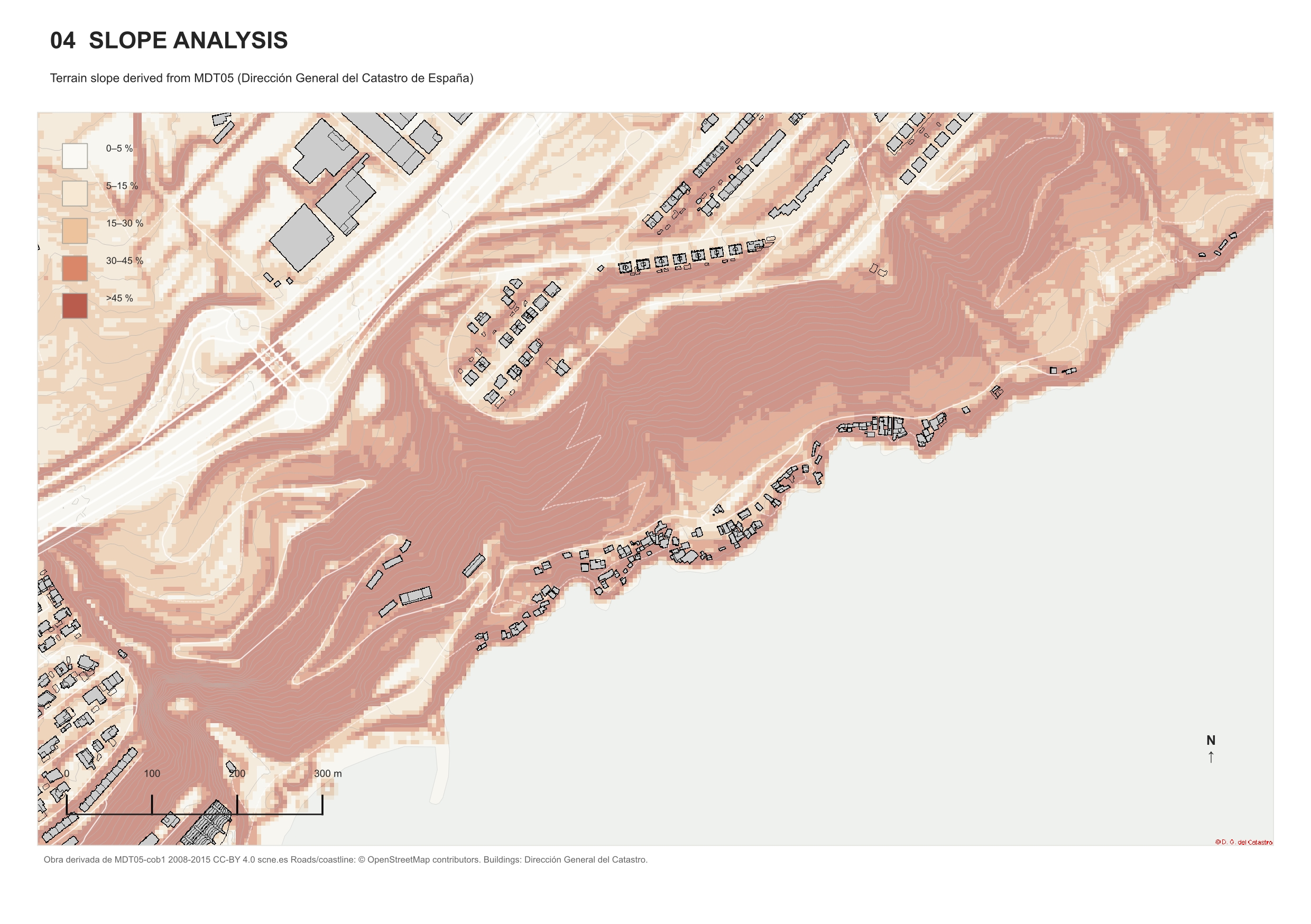
An unusually important due-diligence layer
El Rosario currently operates under an unusual planning situation.
The municipality confirms that its 2010 General Plan was annulled judicially. As a consequence, the Normas Subsidiarias approved in 1991 returned to force. Recent municipal planning documents continue to identify those Normas Subsidiarias as the applicable municipal planning framework.
This has an important consequence for investors:
A visual impression of what appears to be an established urban settlement does not by itself establish the permitted planning status of an individual property.
A serious acquisition process therefore requires parcel-specific verification of at least:
- land classification,
- applicable zoning,
- permitted use,
- building licence history,
- first-occupation/habitability status where relevant,
- cadastral description,
- Land Registry description,
- conformity between the actual building and registered/planning documentation.
Planning complexity: HIGH
This is not necessarily negative. Complex planning environments can produce scarcity. But scarcity has investment value only when the individual asset has a defensible legal position.
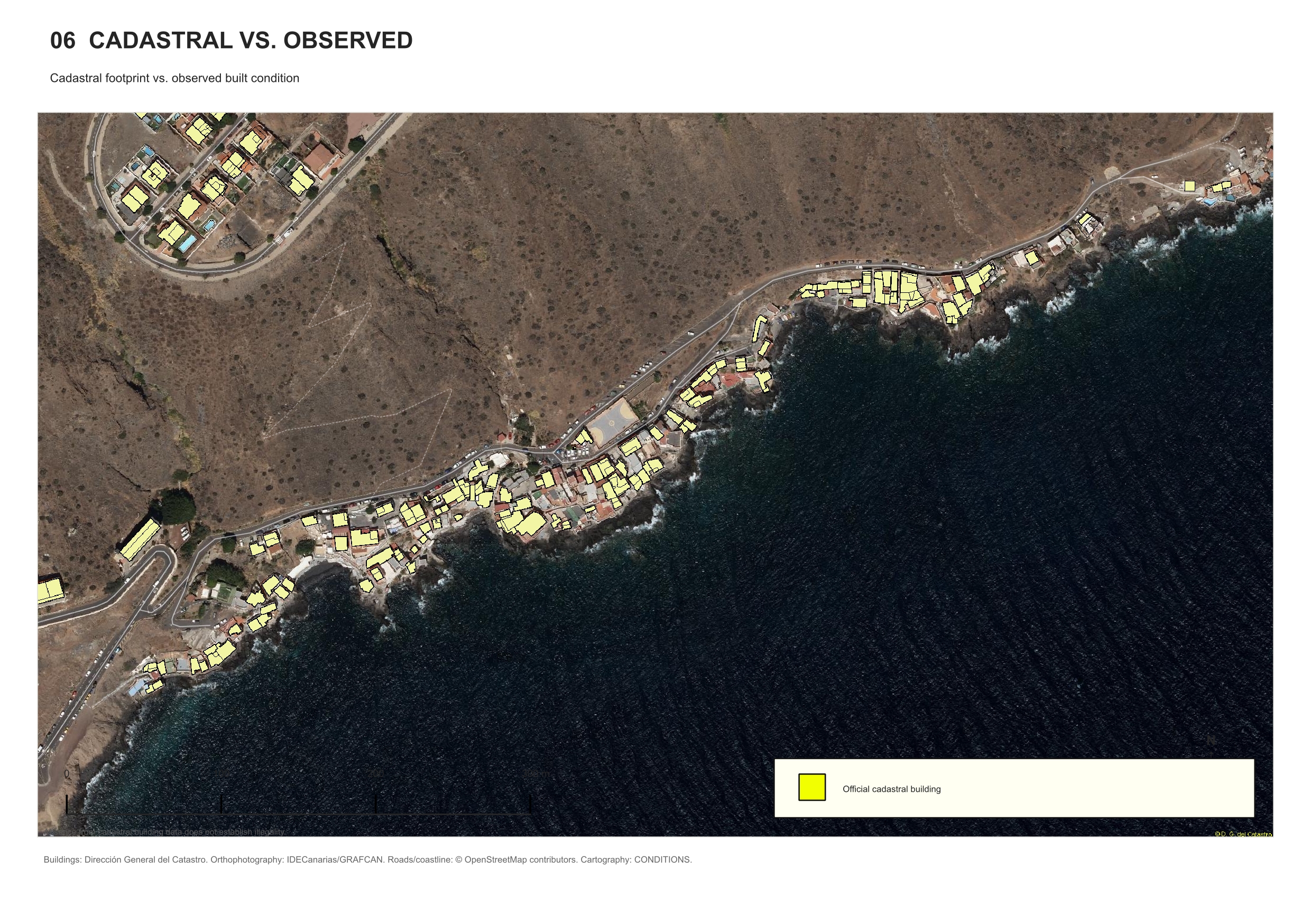
The coastline is simultaneously the asset and the constraint
For Boca Cangrejo, Spanish coastal law is not an abstract regulatory layer. It is potentially fundamental to the value of individual properties.
The Spanish Coastal Act establishes public maritime-terrestrial domain and associated easements. The general transit easement extends six metres inland from the inner boundary of the seashore and may be widened in difficult or dangerous locations.
The exact effect depends on the official coastal boundary and the history and classification of each parcel.
Importantly, this is not merely theoretical in Boca Cangrejo.
In 2024 the Spanish Ministry for Ecological Transition published a procedure concerning a request for a transitional concession for a dwelling located in Boca Cangrejo.
That does not mean all properties in Boca Cangrejo share that condition. It does demonstrate that coastal-domain issues affect at least some residential property in the settlement.
For every waterfront acquisition, CONDITIONS would require:
- official DPMT boundary check,
- protection easement,
- transit easement,
- concession status where applicable,
- Land Registry verification.
These checks should be completed before assigning any premium to the waterfront position.
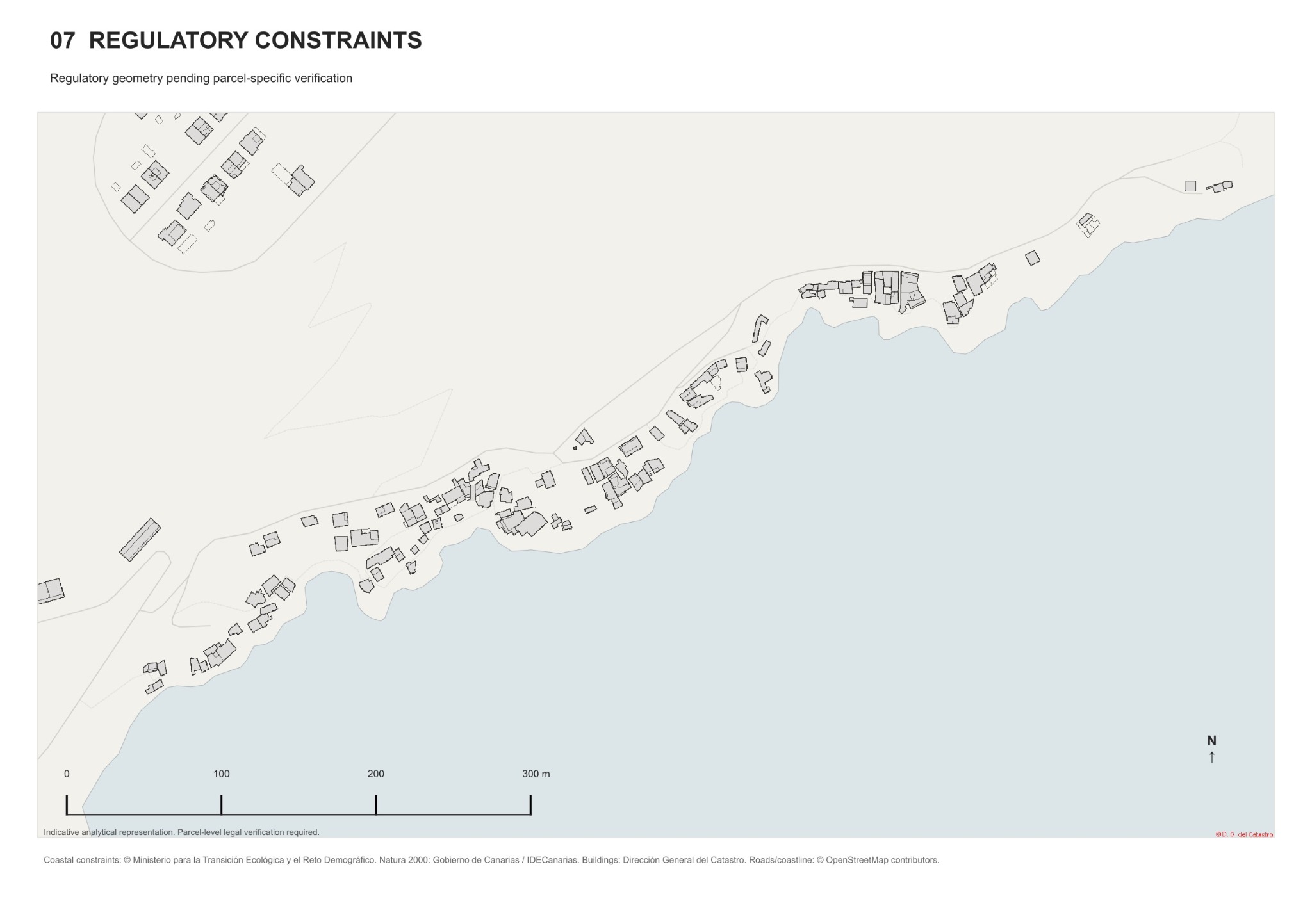
Access is not a secondary issue
In March 2026 Storm Therese caused significant damage along the El Rosario coastline.
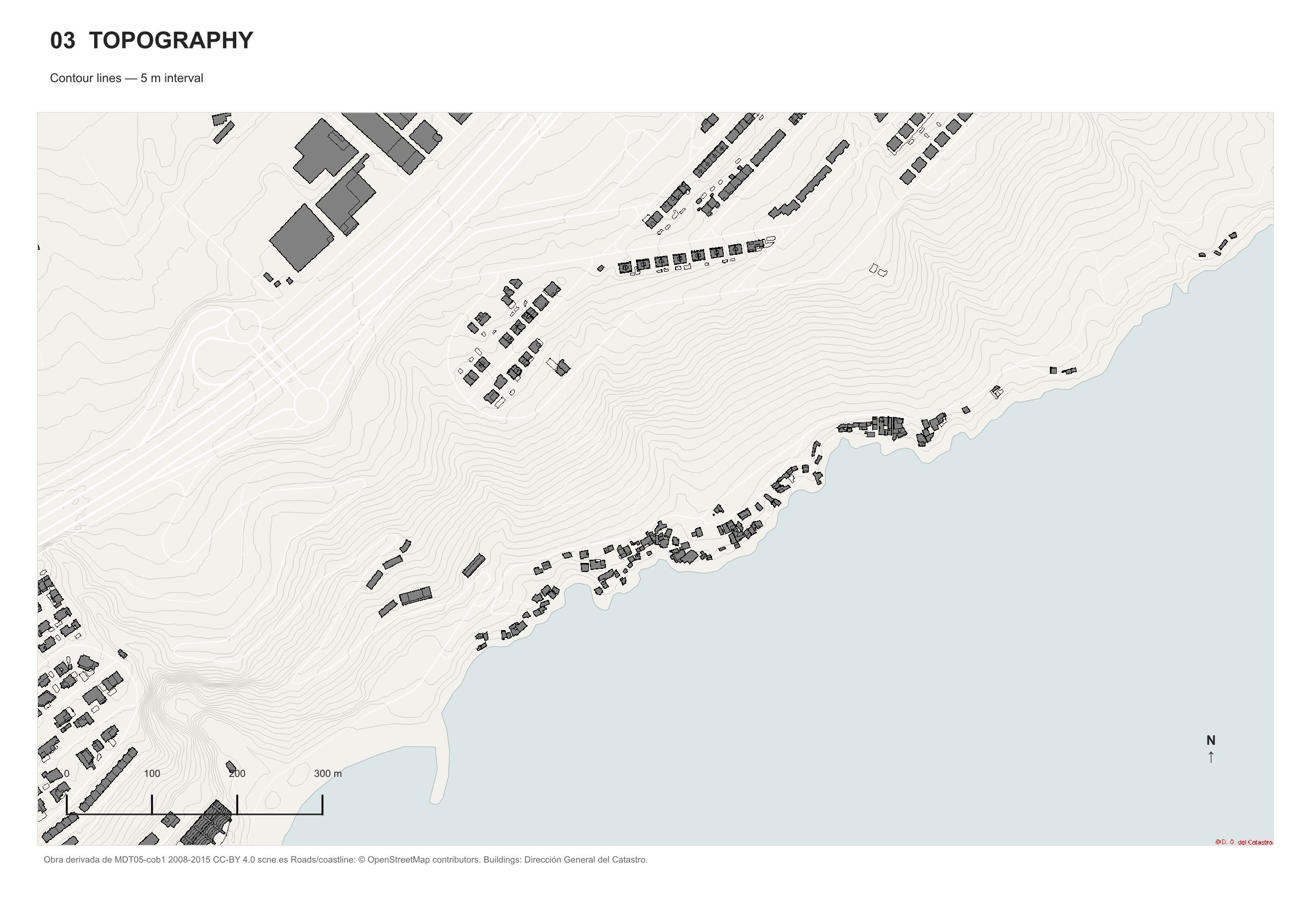
The municipality reported the partial collapse of the Costa Caricia road surface and restricted access toward Boca Cangrejo after strong waves and weather conditions affected the road.
Emergency reconstruction and slope-stabilisation works continued during spring 2026.
The relevance is greater than a single storm event.
The episode demonstrates that the relationship between coastline + road access + topography + extreme marine conditions must form part of the investment assessment.
At the same time, public investment is visible. In late 2025 the municipality improved the pedestrian connection between Boca Cangrejo and Playa La Nea and resurfaced a deteriorated section of the access road.
Infrastructure should therefore not be classified simply as "poor". A more accurate description is:
functional but physically vulnerable.
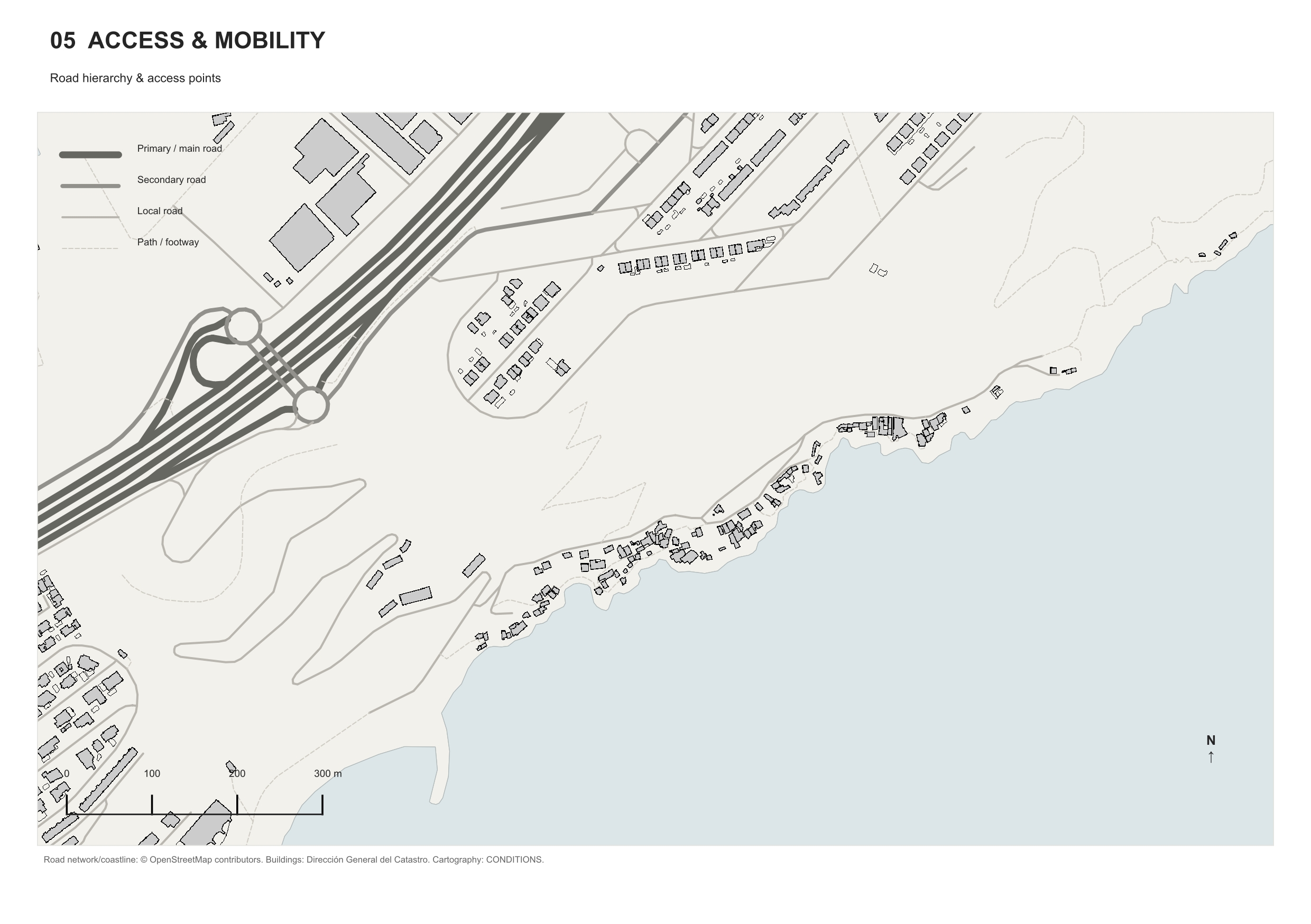
A place, not a resort product
Historical municipal data provides an indication of scale.
The 2016 municipal emergency plan recorded approximately 354 residents in Bocacangrejo at that time. This number is historical and should not be interpreted as the current population.
More importantly, Boca Cangrejo continues to appear within municipal community structures. The town participates in the traditional maritime celebrations of Nuestra Señora del Carmen together with Radazul and Varadero.
The municipality also groups Boca Cangrejo, Costa Caricia and Costanera as a specific intervention zone within its community energy programme.
This matters because the settlement's value is partly derived from remaining a lived residential place rather than becoming a mono-functional tourism product.
Any development strategy that destroys this distinction may ultimately destroy part of the very scarcity premium being acquired.
Scarcity is visible — but the market is too thin for simple benchmarking
The current advertised market in Boca Cangrejo is small.
Idealista currently shows only a handful of residential properties in the Boca Cangrejo–Costanera search area. At the time of this research, examples included:
- a 130 m² apartment at €145,000, advertised at approximately €1,115/m²;
- a 92 m² detached first-line property at €285,000, approximately €3,098/m²;
- other coastal houses and apartments at substantially higher asking prices.
The wider municipality of El Rosario showed an Idealista asking-price indicator of approximately €2,690/m² in July 2026, up 24.1% year-on-year according to the platform's dataset.
These figures should not be interpreted as transaction values.
Nor is the Boca Cangrejo sample sufficiently large or homogeneous to derive a reliable local €/m² benchmark.
That is itself informative.
In thin markets such as this, conventional comparables become less useful.
Asset value depends disproportionately on exact micro-location, legal status, relationship to the sea, outdoor space, accessibility, structural condition, ability to renovate and permitted use.
Therefore the correct unit of analysis is not primarily:
€/m².
It is:
€/m² × legal certainty × spatial scarcity.
Tourism potential has changed fundamentally
Since December 2025, Canary Islands holiday-rental regulation has changed.
Ley 6/2025 establishes that residential zoning does not automatically permit tourist accommodation. Tourist use of a dwelling must be explicitly permitted by the applicable detailed planning regime.
This has particularly important implications in a place such as Boca Cangrejo.
The investment thesis Buy waterfront house → obtain VV → rent to tourists can no longer be treated as a default assumption.
There are transitional regimes for previously authorised holiday rentals, but they are nuanced. Of particular importance, a consolidated tourism-use declaration can cease to have effect upon transfer of ownership.
Other existing operators who do not qualify for consolidation may generally continue under a five-year transitional regime unless tourist use becomes permitted under the new planning framework; specific extensions and exceptions exist.
A seller's statement such as "Tiene VV" is therefore insufficient investment evidence.
A buyer needs to establish:
- What exact legal tourism regime applies?
- To whom does the right belong?
- Does it survive the transaction?
- Does planning permit future tourism use?
This should materially affect pricing.
The constraint is the moat
Boca Cangrejo should not be approached through a conventional development thesis.
The conventional thesis would be:
beautiful coastline + proximity to Santa Cruz + tourism demand = development opportunity.
The CONDITIONS thesis is different:
Boca Cangrejo becomes valuable precisely because creating another Boca Cangrejo is increasingly difficult.
Its investment potential therefore lies predominantly in existing spatial conditions rather than future buildable capacity.
That produces a different acquisition strategy.
Four possible investment approaches
STRATEGY A / LEGALLY ROBUST COASTAL RESIDENCE
STRATEGY B / ARCHITECTURAL REHABILITATION
STRATEGY C / SMALL HOSPITALITY ASSET
STRATEGY D / NEW-BUILD DEVELOPMENT
STRATEGY A / LEGALLY ROBUST COASTAL RESIDENCE
Acquire a high-quality existing residential asset with verified building legality, clean registry/cadastral correspondence, defensible coastal-law position, strong sea relationship and good physical condition.
Use: primary / secondary residence
Risk: moderate
Potential: high
STRATEGY B / ARCHITECTURAL REHABILITATION
Acquire an existing legally robust building whose architectural value is below its locational value.
Risk: moderate–high
Potential: high if acquisition basis is low
STRATEGY C / SMALL HOSPITALITY ASSET
Potentially attractive but substantially more complex and dependent on planning, tourism law and precise use classification.
Risk: high
Potential: asset-specific
STRATEGY D / NEW-BUILD DEVELOPMENT
LOW PRIORITY
The identity of Boca Cangrejo is derived from an existing settlement structure, while planning and coastal conditions significantly reduce the attractiveness of a speculative land-development strategy.
Qualitative assessment
Reasonably well-supported conclusions
Boca Cangrejo is formally recognised as an established settlement within El Rosario.
Its urban structure differs from neighbouring planned coastal developments and retains characteristics of an individually built traditional coastal settlement.
El Rosario's present planning framework remains affected by the annulment of the 2010 PGO and the reactivation of the 1991 Normas Subsidiarias.
Coastal-law issues are demonstrably relevant to at least some Boca Cangrejo properties.
Recent storm damage demonstrated physical vulnerability of the principal access corridor.
The 2025 Canary Islands tourism-housing law materially increases the importance of planning status when assessing short-term-rental potential.
Open research questions
These are open research questions, not missing details to be filled with assumptions.
- exact current zoning boundaries for each part of Boca Cangrejo,
- building parameters applicable to representative parcels,
- extent of buildings in legal-consolidation or other irregular status.
- exact DPMT line through the settlement,
- number of properties affected by concessions,
- precise protection and transit easements for individual parcels.
- actual transaction values,
- average marketing periods,
- proportion of cash purchases,
- nationality/profile of purchasers.
- number of currently registered tourist dwellings inside Boca Cangrejo itself,
- legal status of those registrations under Ley 6/2025,
- municipal intentions regarding future tourist-use planning.
- final engineering assessment following the 2026 road failure,
- long-term coastal-protection strategy,
- residual storm and wave risk to individual properties.
These questions should become Phase II of the research rather than be disguised as certainty.
What could this place become?
The wrong answer would be:
a boutique tourism destination.
That would imply the place needs transformation in order to acquire value.
The stronger interpretation is almost the opposite.
Boca Cangrejo already possesses the difficult asset:
identity.
Its future economic value may therefore depend on preventing the destruction of that identity while improving the quality and legal robustness of individual assets.
This suggests an investment logic based on:
acquisition → verification → careful rehabilitation → long-term scarcity
rather than:
acquisition → expansion → tourism exploitation → maximum yield
SELECTIVE INTEREST
Boca Cangrejo is not a straightforward investment location.
And that is precisely why CONDITIONS considers it interesting.
The settlement combines several characteristics that cannot easily be reproduced:
- proximity to a metropolitan centre,
- immediate Atlantic exposure,
- small-scale traditional morphology,
- extremely limited comparable supply,
- increasing regulatory barriers to replication.
Those characteristics create a credible scarcity thesis.
But they do not justify indiscriminate acquisition.
The value is likely concentrated in a relatively small subset of properties that satisfy three simultaneous conditions:
exceptional spatial position + defensible legal status + capacity for high-quality rehabilitation
For such properties, regulatory constraint may act not merely as risk but eventually as a barrier to competing supply.
For legally ambiguous assets, however, the same constraints can destroy liquidity and optionality.
THE CONSTRAINT IS THE MOAT.
FULL RESEARCH
Full research access includes the extended analysis, evidence and decision-relevant sections of this report.
REQUEST FULL RESEARCH →For investment, development or professional research enquiries.
CR-001 combines official planning and regulatory documents, cadastral and geographic data, current orthophotography, open vector data and advertised market evidence. Verified facts are separated from observations, inferences and hypotheses.
Cadastral geometry is treated as an administrative dataset rather than proof of planning legality. Visible structures absent from cadastral data are therefore recorded only as discrepancies requiring further due diligence.
Market asking prices are treated as signals, not transaction evidence. Regulatory and coastal conclusions remain asset-specific and require parcel-level confirmation before any acquisition decision.
Research status: August 2026.
Researching places. Identifying potential.
Independent spatial research
Canary Islands / 2026